James Watt
Engineer whose separate-condenser steam engine powered the industrial revolution and lent his name to the unit of power.
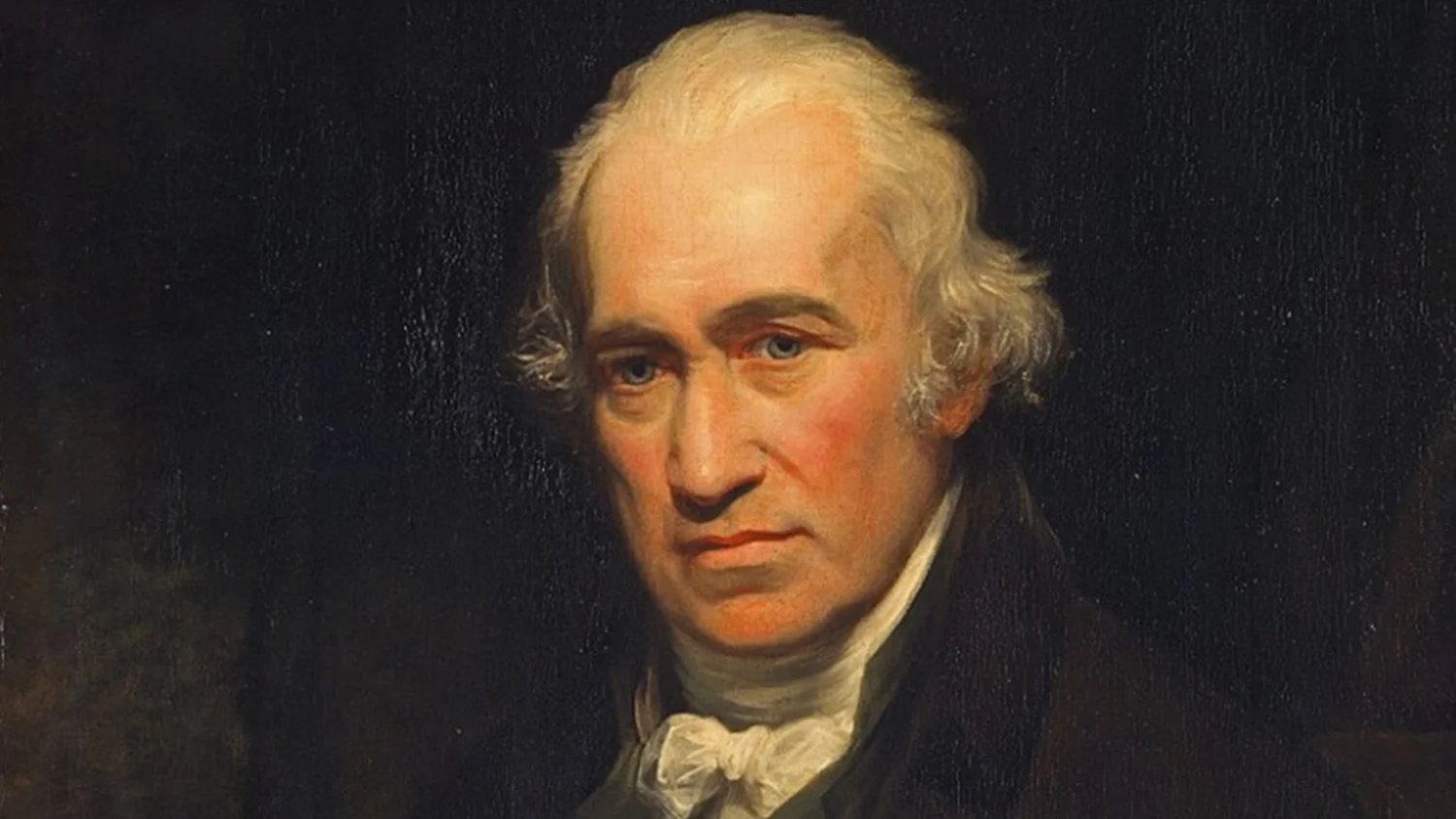
Biography
James Watt was born in Greenock, Scotland, in 1736. Trained as an instrument maker at the University of Glasgow, he was asked in 1763 to repair a Newcomen atmospheric engine and became fascinated by its poor efficiency. He worked out that the engine wasted most of its fuel heating and re-cooling the same cylinder on every stroke. His answer — a separate condenser that kept the cylinder continuously hot — was patented in 1769 and transformed the steam engine from a pumping curiosity into the prime mover of the industrial revolution.
With his business partner Matthew Boulton he founded Boulton & Watt in Birmingham, built engines for mines, mills, and factories across Britain, and introduced quantitative measures of engine output. Selling engines to buyers who thought in horses, Watt invented the unit of horsepower — one horse pulling 150 lb at a steady 2.5 mph, equivalent to about 746 watts in modern units. He went on to invent the centrifugal governor, the parallel motion linkage, and the indicator diagram for measuring engine work.
The SI unit of power, the watt (W), was named for him in 1960. He died at Heathfield Hall in 1819, a celebrated figure and a wealthy man.
Contributions
- 01patented the separate condenser for steam engines (1769)
- 02made the steam engine efficient enough to drive the industrial revolution
- 03invented the centrifugal governor for engine speed regulation
- 04introduced the horsepower as a commercial unit of engine output
- 05designed the indicator diagram for measuring engine cycles